Lisfranc Injury Fixation
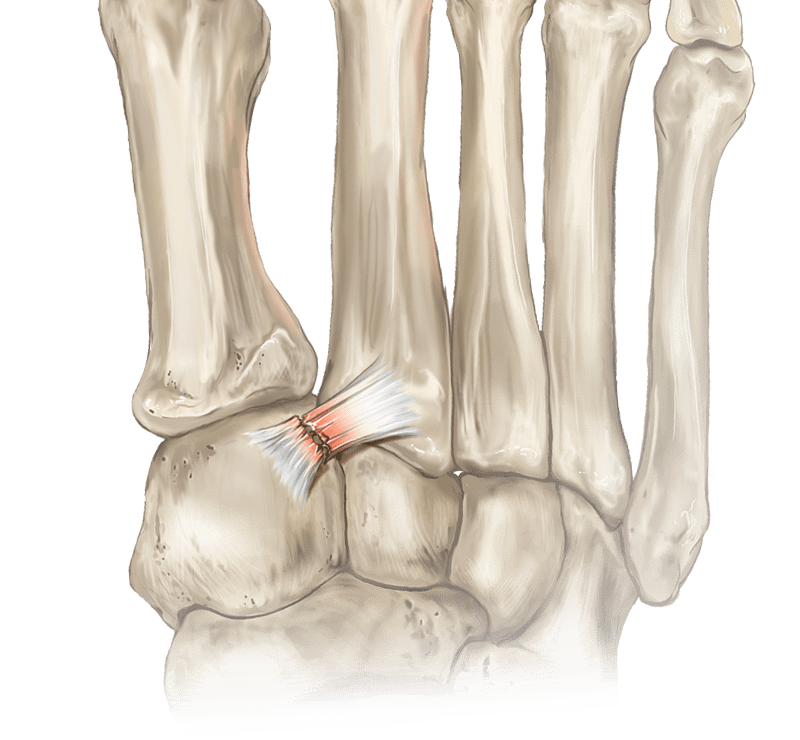
Low energy, purely ligamentous injuries of the Lisfranc joint are difficult to detect and require a high index of suspicion due to their subtle presentation, particularly in athletes. Weightbearing radiographs, in combination with CT and MRI, may be required for proper diagnosis. Any diastasis greater than 2 mm is considered a positive for Lisfranc injury.
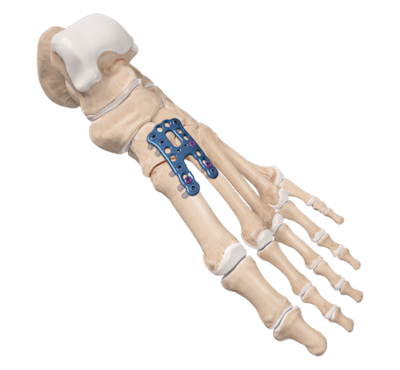
Traditional fixation methods using screws and/or plates provide a stable construct for the Lisfranc injury but may overconstrain the joint, resulting in the patient's inability to return to preinjury activity levels. Additionally, rigid fixation often requires a secondary surgery for hardware removal prior to full weightbearing and has the added risk of reduction loss.
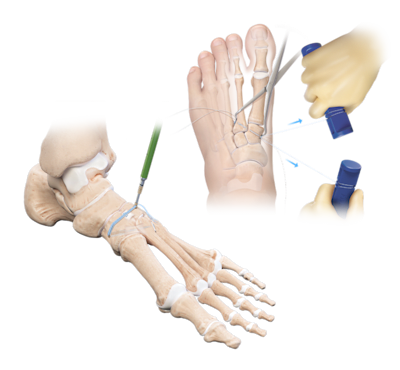
Flexible fixation devices such as the 2.7 mm Knotless Mini TightRope® implant and Lisfranc Fixation System for InternalBrace™ repair overcome the shortcomings of rigid fixation and provide a strong1,2 and reproducible construct to stabilize the Lisfranc joint.
References
1. Arthrex, Inc. Data on file (APT-05278). Naples, FL; 2021.
2. Arthrex, Inc. Data on file (APT-05279). Naples, FL; 2021.