Rotator Cuff Augmentation

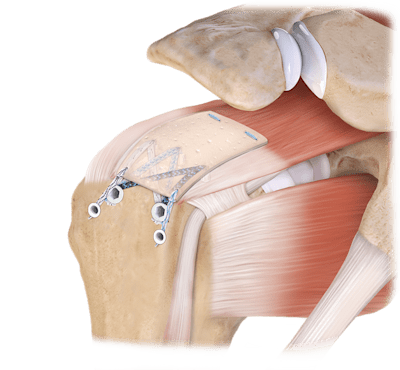
Approximately 20% of patients experience failed healing after primary rotator cuff repair, with up to 86% of failures occurring at the suture–tendon interface.1,2 Augmentation of rotator cuff repairs may improve biomechanical strength and tendon healing rates.3-6 The CuffMend™ technique provides a simplified technique for augmenting the rotator cuff using human dermal allograft, autograft biceps tendon, or SuturePatch tissue reinforcement.

References

1. Kwon J, Kim SH, Lee YH, Kim TI, Oh JH. The Rotator Cuff Healing Index: a new scoring system to predict rotator cuff healing after surgical repair. Am J Sports Med. 2019;47(1):173-180. doi:10.1177/0363546518810763

2. Cummins CA, Murrell GA. Mode of failure for rotator cuff repair with suture anchors identified at revision surgery. J Shoulder Elbow Surg. 2003;12(2):128-133. doi:10.1067/mse.2003.21

3. Barber FA, Burns JP, Deutsch A, Labbé MR, Litchfield RB. A prospective, randomized evaluation of acellular human dermal matrix augmentation for arthroscopic rotator cuff repair. Arthroscopy. 2012;28(1):8-15. doi:10.1016/j.arthro.2011.06.038

4. Bailey JR, Kim C, Alentorn-Geli E, et al. Rotator cuff matrix augmentation and interposition: a systematic review and meta-analysis. Am J Sports Med. 2019;47(6):1496-1506. doi:10.1177/0363546518774762

5. Omae H, Steinmann SP, Zhao C, et al. Biomechanical effect of rotator cuff augmentation with an acellular dermal matrix graft: a cadaver study. Clin Biomech (Bristol, Avon). 2012;27(8):789-792. doi:10.1016/j.clinbiomech.2012.05.001

6. Gilot GJ, Alvarez-Pinzon AM, Barcksdale L, Westerdahl D, Krill M, Peck E. Outcome of large to massive rotator cuff tears repaired with and without extracellular matrix augmentation: a prospective comparative study. Arthroscopy. 2015;31(8):1459-1465. doi:10.1016/j.arthro.2015.02.032

View More

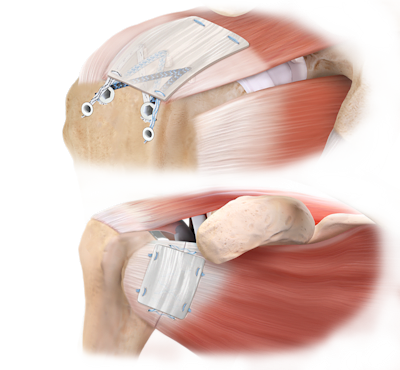
Approximately 20% of patients experience failed healing after primary rotator cuff repair, with up to 86% of failures occurring at the suture–tendon interface.1,2 Augmentation of rotator cuff repairs may improve biomechanical strength and tendon healing rates.3-6 The CuffMend™ technique provides a simplified technique for augmenting the rotator cuff using human dermal allograft, autograft biceps tendon, or SuturePatch tissue reinforcement.

References

1. Kwon J, Kim SH, Lee YH, Kim TI, Oh JH. The Rotator Cuff Healing Index: a new scoring system to predict rotator cuff healing after surgical repair. Am J Sports Med. 2019;47(1):173-180. doi:10.1177/0363546518810763

2. Cummins CA, Murrell GA. Mode of failure for rotator cuff repair with suture anchors identified at revision surgery. J Shoulder Elbow Surg. 2003;12(2):128-133. doi:10.1067/mse.2003.21

3. Barber FA, Burns JP, Deutsch A, Labbé MR, Litchfield RB. A prospective, randomized evaluation of acellular human dermal matrix augmentation for arthroscopic rotator cuff repair. Arthroscopy. 2012;28(1):8-15. doi:10.1016/j.arthro.2011.06.038

4. Bailey JR, Kim C, Alentorn-Geli E, et al. Rotator cuff matrix augmentation and interposition: a systematic review and meta-analysis. Am J Sports Med. 2019;47(6):1496-1506. doi:10.1177/0363546518774762

5. Omae H, Steinmann SP, Zhao C, et al. Biomechanical effect of rotator cuff augmentation with an acellular dermal matrix graft: a cadaver study. Clin Biomech (Bristol, Avon). 2012;27(8):789-792. doi:10.1016/j.clinbiomech.2012.05.001

6. Gilot GJ, Alvarez-Pinzon AM, Barcksdale L, Westerdahl D, Krill M, Peck E. Outcome of large to massive rotator cuff tears repaired with and without extracellular matrix augmentation: a prospective comparative study. Arthroscopy. 2015;31(8):1459-1465. doi:10.1016/j.arthro.2015.02.032
View More
CuffMend™ Rotator Cuff Augmentation Technique
The CuffMend system provides an efficient, simplified approach for augmenting partial- and full-thickness rotator cuff tears. The system employs the benefits of a thick ArthroFlex® dermal allograft, which provides mechanical strength and supports healing.1,2 Introduce the graft using the graft spreader and use the FiberStitch™ RC implant for medial soft-tissue fixation to the rotator cuff tendon. Use self-punching PushLock® anchors, spanning the graft over the tuberosity footprint, for lateral bony fixation. Implantation of the CuffMend system is designed to be completed in less than 10 minutes. Scientific literature supports the use of acellular dermal grafts as a safe and effective solution for rotator cuff augmentation.3
ArthroFlex is a registered trademark of LifeNet Health.
References
1. Ely EE, Figueroa NM, Gilot GJ. Biomechanical analysis of rotator cuff repairs with extracellular matrix graft augmentation. Orthopedics. 2014;37(9):608-614. doi:10.3928/01477447-20140825-05
2. Smith MJ, Bozynski cc, Kuroki K, Cook CR, Stoker AM, Cook JL. Comparison of biologic scaffolds for augmentation of partial rotator cuff tears in a canine model. J Shoulder Elbow Surg. 2020;29(8):1573-1583. doi:10.1016/j.jse.2019.11.028
3. Gilot GJ, Alvarez-Pinzon AM, Barcksdale L, Westerdahl D, Krill M, Peck E. Outcome of large to massive rotator cuff tears repaired with and without extracellular matrix augmentation: a prospective comparative study. Arthroscopy. 2015;31(8):1459-1465. doi:10.1016/j.arthro.2015.02.032