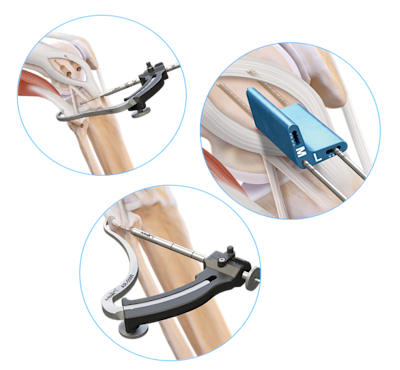
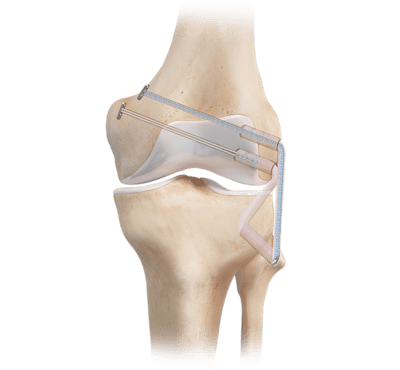
Medial Collateral Ligament (MCL) Repair
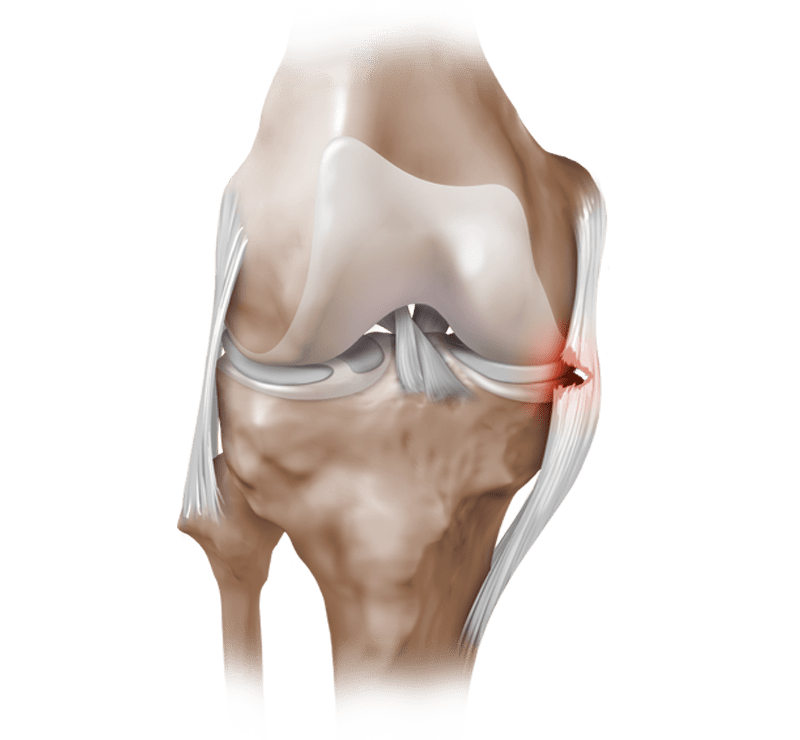
Certain MCL injuries, including femoral and tibial avulsion injuries, such as Stener lesions, are more amenable to repair than others.1
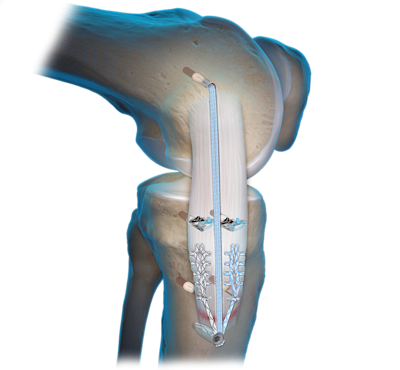
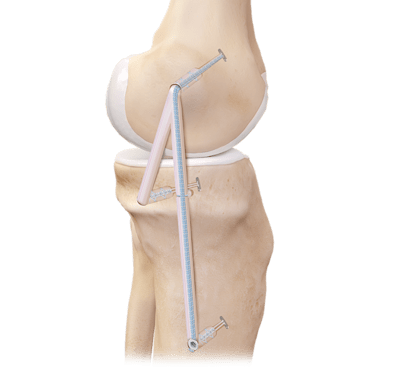
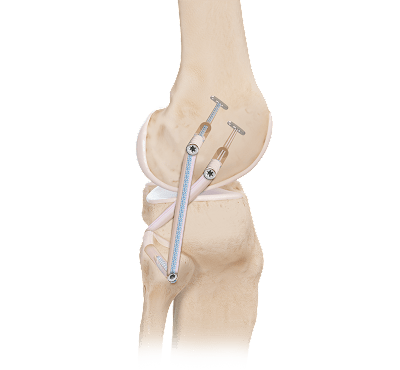
Using FiberTape® suture for the InternalBrace™ technique for MCL repair has been shown to provide additional stabilization compared to an MCL repair using only suture.2 Adding the InternalBrace technique to an MCL repair may result in lower failure rates and less residual laxity post-op as well as shorter immobilization times and faster return to play.2 FiberTape sutures have been used for more than 15 years in more than 4 million cases, including tendon and ligament-bridging repairs.
The InternalBrace surgical technique is intended only to support the primary repair and is not intended as a replacement for the standard of care using biologic augmentation in a primary repair. The InternalBrace surgical technique is intended only for soft-tissue-to-bone fixation and is not cleared for bone-to-bone fixation.
References
1. Shultz CL, Poehlein E, Morriss NJ, et al. Nonoperative management, repair, or reconstruction of the medial collateral ligament in combined anterior cruciate and medial collateral ligament injuries-which is best? a systematic review and meta-analysis. Am J Sports Med. 2024;52(2):522-534. doi:10.1177/03635465231153157
2. van Eck CF, Nakamura T, Price T, Linde M, Smolinski P. Suture tape augmentation improves laxity of MCL repair in the ACL reconstructed knee. Knee Surg Sports Traumatol Arthrosc. 2021;29(8):2545-2552. doi:10.1007/s00167-020-06386-7