ACL Reconstruction

BioACL™ Technique
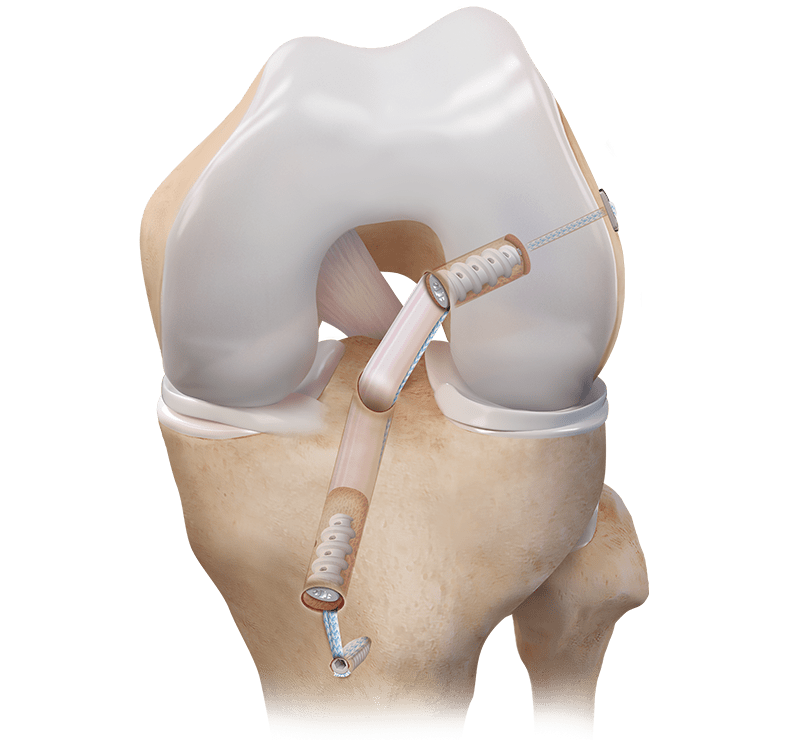
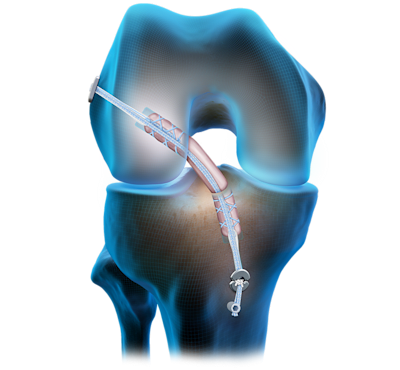
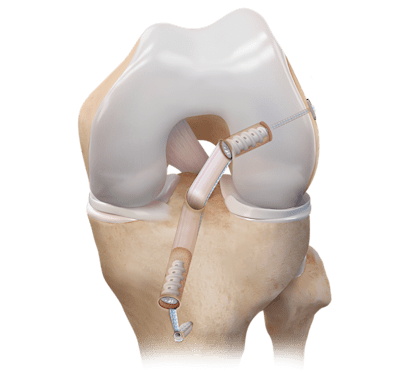
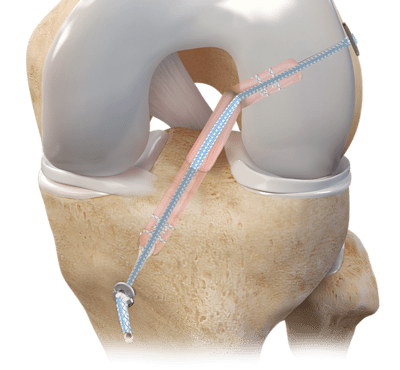
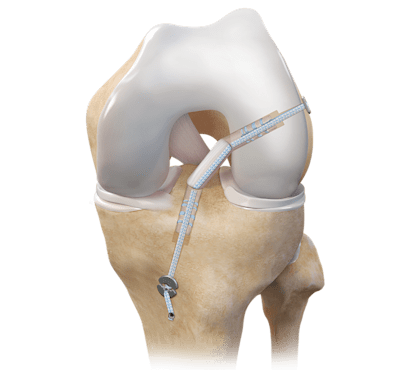
The BioACL technique harnesses the power of next-generation biologics to provide the ultimate anatomic, minimally invasive, reproducible approach for taking patient outcomes to the next level.
By prefilling ACL bone tunnels with a powerful composite of concentrated platelet-rich plasma (cPRP) from bone marrow aspirate (BMA) or whole blood processed with the Angel® system, the patient’s own bone collected with the GraftNet™ device, and AlloSync® Pure demineralized bone matrix, the BioACL technique provides all the necessary healing components for an ACL reconstruction procedure.
In conjunction with the QuadLink™ with InternalBrace™ technique, the BioACL technique has been shown to result in earlier range of motion, improved limb symmetry, less bone-tunnel widening, and improved patient-reported outcomes as compared to nonaugmented ACL procedures.1
Reference
1. Lavender CD, Schaver AL, Taylor S, et al. Anterior cruciate ligament reconstruction augmentation with bone marrow aspirate concentrate, demineralized bone matrix, and suture tape shows no difference in outcomes—but faster functional recovery—versus non-augmented anterior cruciate ligament reconstruction. Arthroscopy. 2025;41(5):1496-1508. https://doi.org/10.1016/j.arthro.2024.06.042
The InternalBrace surgical technique is intended only to augment the primary repair/reconstruction by expanding the area of tissue approximation during the healing period and is not intended as a replacement for the native ligament. The InternalBrace technique is for use during soft tissue-to-bone fixation procedures and is not cleared for bone-to-bone fixation.
By prefilling ACL bone tunnels with a powerful composite of concentrated platelet-rich plasma (cPRP) from bone marrow aspirate (BMA) or whole blood processed with the Angel® system, the patient’s own bone collected with the GraftNet™ device, and AlloSync® Pure demineralized bone matrix, the BioACL technique provides all the necessary healing components for an ACL reconstruction procedure.
In conjunction with the QuadLink™ with InternalBrace™ technique, the BioACL technique has been shown to result in earlier range of motion, improved limb symmetry, less bone-tunnel widening, and improved patient-reported outcomes as compared to nonaugmented ACL procedures.1
Reference
1. Lavender CD, Schaver AL, Taylor S, et al. Anterior cruciate ligament reconstruction augmentation with bone marrow aspirate concentrate, demineralized bone matrix, and suture tape shows no difference in outcomes—but faster functional recovery—versus non-augmented anterior cruciate ligament reconstruction. Arthroscopy. 2025;41(5):1496-1508. https://doi.org/10.1016/j.arthro.2024.06.042
The InternalBrace surgical technique is intended only to augment the primary repair/reconstruction by expanding the area of tissue approximation during the healing period and is not intended as a replacement for the native ligament. The InternalBrace technique is for use during soft tissue-to-bone fixation procedures and is not cleared for bone-to-bone fixation.
Revision ACL Reconstruction
It is estimated that between 1.8% and 10.4% of patients who undergo ACL reconstruction will require a revision.1 Addressing tunnel widening and restoring previously malpositioned tunnels can be challenging, sometimes requiring a two-stage approach.2 The Cannulated Bone Dowel Kit offers surgeons a simplified solution to effectively address these issues.
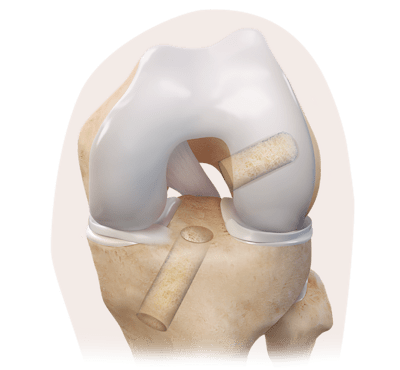
Allograft bone dowels act as a biologic scaffold to provide an immediate structural architecture and promote osseous integration. The bone dowels can be soaked in platelet-rich plasma (PRP) or bone marrow aspirate to provide autologous cells and growth factors that facilitate graft incorporation.
Additionally, the press-fit nature and structural integrity of the bone dowels provides surgeons the option to take a single-stage approach in cases where no more than half of the failed tunnel is violated. Favorable outcomes have been reported for patients undergoing single-stage ACL reconstruction using allograft bone dowels.3
Along with allograft bone dowels, the FlipCutter® III drill is particularly advantageous in setting a revision ACL reconstruction. The all-in-one adjustable guide pin and reamer allow surgeons to precisely debride remnant tissue and maximize residual bone stock during tunnel preparation.
References
1. MARS Group, Ding DY, Zhang AL, et al. Subsequent surgery after revision anterior cruciate ligament reconstruction: rates and risk factors from a multicenter cohort. Am J Sports Med. 2017;45(9):2068-2076. doi:10.1177/0363546517707207
2. Richter DL, Werner BC, Miller MD. Surgical pearls in revision anterior cruciate ligament surgery. When must I stage? Clin Sports Med. 2017;36(1):173-187. doi:10.1016/j.csm.2016.08.008
3. Werner BC, Gilmore CJ, Hamann JC, et al. Revision anterior cruciate ligament reconstruction: results of a single-stage approach using allograft dowel bone grafting for femoral defects. J Am Acad Orthop Surg. 2016;24(8):581-587. doi:10.5435/JAAOS-D-15-00572
• Revising Two-Stage BioACL Technique
• BioACL™ Technique
• Revising Two-Stage Quad Tendon Autograft
• Quad Tendon Graft ACL Reconstruction
• Revising Two-Stage BTB Autograft
• BTB Autograft ACL Reconstruction
• Revising Two-Stage HT Autograft
• Hamstring Autograft ACL Reconstruction
• Revising Two-Stage Allograft
• Allograft ACL Reconstruction
• Allograft Bone
• Bone Grafting with Revision Bone Dowels
Arthrex - Cannulated Revision Bone Dowels
Allograft bone dowels act as a biologic scaffold to provide an immediate structural architecture and promote osseous integration. The bone dowels can be soaked in platelet-rich plasma (PRP) or bone marrow aspirate to provide autologous cells and growth factors that facilitate graft incorporation.
Additionally, the press-fit nature and structural integrity of the bone dowels provides surgeons the option to take a single-stage approach in cases where no more than half of the failed tunnel is violated. Favorable outcomes have been reported for patients undergoing single-stage ACL reconstruction using allograft bone dowels.3
Along with allograft bone dowels, the FlipCutter® III drill is particularly advantageous in setting a revision ACL reconstruction. The all-in-one adjustable guide pin and reamer allow surgeons to precisely debride remnant tissue and maximize residual bone stock during tunnel preparation.
References
1. MARS Group, Ding DY, Zhang AL, et al. Subsequent surgery after revision anterior cruciate ligament reconstruction: rates and risk factors from a multicenter cohort. Am J Sports Med. 2017;45(9):2068-2076. doi:10.1177/0363546517707207
2. Richter DL, Werner BC, Miller MD. Surgical pearls in revision anterior cruciate ligament surgery. When must I stage? Clin Sports Med. 2017;36(1):173-187. doi:10.1016/j.csm.2016.08.008
3. Werner BC, Gilmore CJ, Hamann JC, et al. Revision anterior cruciate ligament reconstruction: results of a single-stage approach using allograft dowel bone grafting for femoral defects. J Am Acad Orthop Surg. 2016;24(8):581-587. doi:10.5435/JAAOS-D-15-00572
• Revising Two-Stage BioACL Technique
• BioACL™ Technique
• Revising Two-Stage Quad Tendon Autograft
• Quad Tendon Graft ACL Reconstruction
• Revising Two-Stage BTB Autograft
• BTB Autograft ACL Reconstruction
• Revising Two-Stage HT Autograft
• Hamstring Autograft ACL Reconstruction
• Revising Two-Stage Allograft
• Allograft ACL Reconstruction
• Allograft Bone
• Bone Grafting with Revision Bone Dowels
Arthrex - Cannulated Revision Bone Dowels