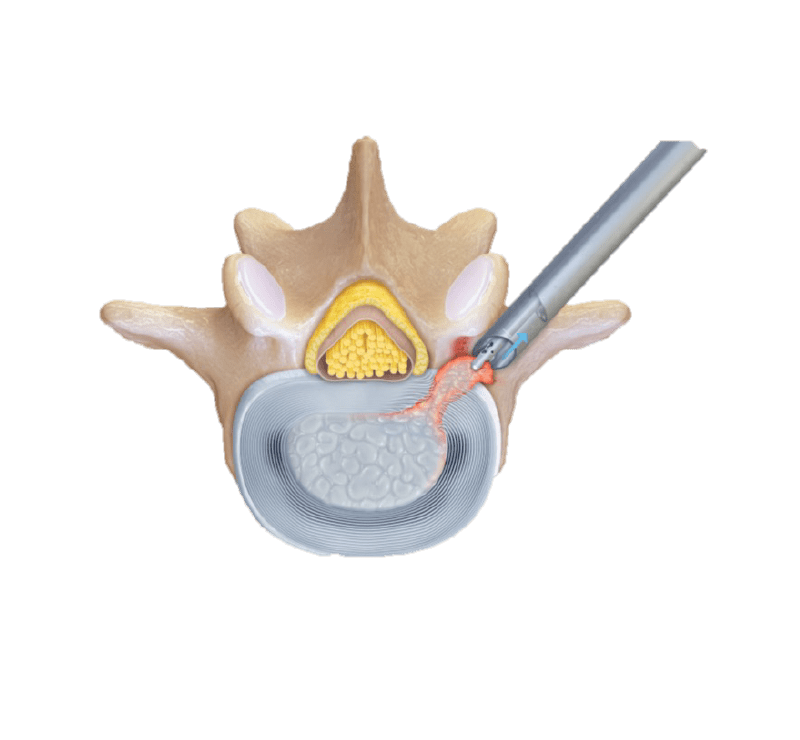
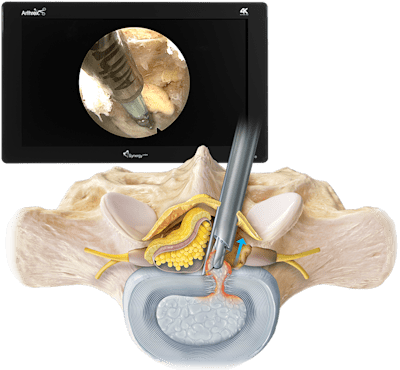
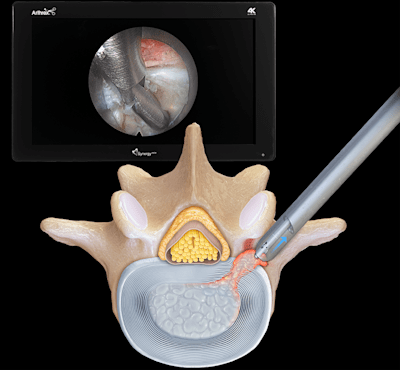
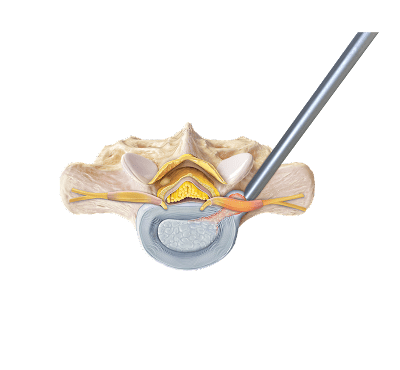
Transforaminal Endoscopic Lumbar Discectomy
A transforaminal, or paraspinal, approach provides the ability to reach far-lateral disc herniations. Using a spine-specific endoscope minimizes soft-tissue disruption, resulting in less postoperative pain.1,2 Additionally, studies showed that approximately 85% patients who underwent endoscopic lumbar discectomy returned to athletic activity in as few as 6 to 8 weeks.3,4
References
1. Sairyo K, Matsuura T, Higashino K, et al. Percutaneous endoscopic lumbar discectomy for athletes. J Spine. 2013;S5(006):1-4. doi:10.4172/2165-7939.S5-006
2. Sivakanthan S, Williams JR, Feroze AH, et al. Endoscopic spine surgery in athletes: case series and review of literature. World Neurosurg. 2021;145:702-707. doi:10.1016/j.wneu.2020.08.211
3. Polikandriotis JA, Hudak EM, Perry MW. Minimally invasive surgery through endoscopic laminotomy and foraminotomy for the treatment of lumbar spinal stenosis. J Orthop. 2013;10(1):13-16. doi:10.1016/j.jor.2013.01.006
4. Ruetten S, Komp M, Merk H, Godolias G. Use of newly developed instruments and endoscopes: Full-endoscopic resection of lumbar disc herniations via the interlaminar and lateral transforaminal approach. J Neurosurg Spine. 2007;6(6):521-530. doi:10.3171/spi.2007.6.6.2